📊 Quick Overview
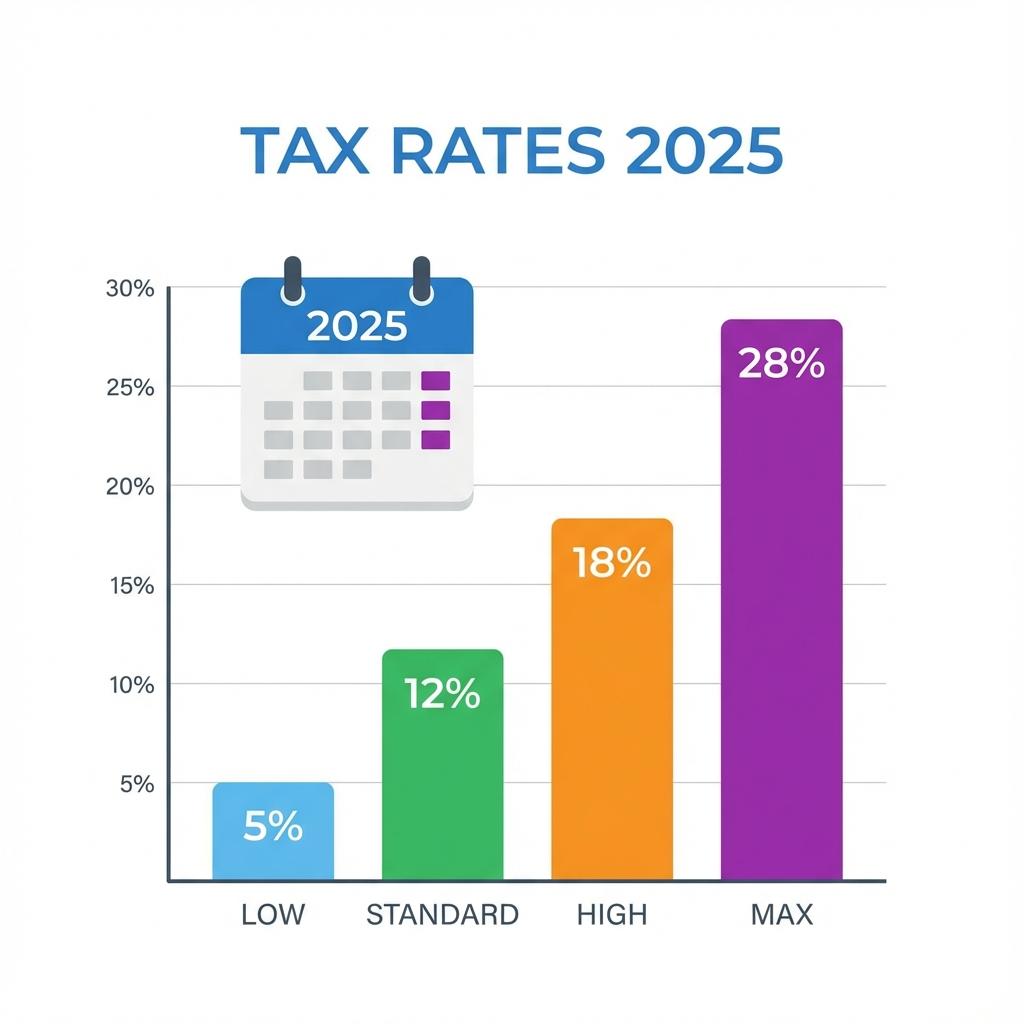
India uses a multi-tier GST structure with rates of 0%, 5%, 12%, 18%, and 28%. The most common rate is 18%, which applies to most goods and services. Understanding which rate applies to your product or service is crucial for accurate invoicing.
0% GST Rate
Essential items and unprocessed goods
Common Examples:
- •Fresh vegetables and fruits
- •Food grains (rice, wheat)
- •Fresh milk and eggs
- •Salt
- •Unbranded bread
5% GST Rate
Common household items
Common Examples:
- •Apparels up to ₹1000
- •Restaurant services (non-AC)
- •Transport services (economy)
- •Basic medicines
12% GST Rate
Processed foods and electronics
Common Examples:
- •Processed foods
- •Computers and laptops
- •Mobile phones (some)
- •AC restaurant services
18% GST Rate
Most goods and services (standard rate)
Common Examples:
- •Most services
- •Fast food
- •IT services
- •Software services
- •Hotel accommodation
28% GST Rate
Luxury items and sin goods
Common Examples:
- •Luxury cars
- •Cigarettes
- •Aerated drinks
- •5-star hotels
- •Casinos
How to Find the Correct GST Rate
1. Check HSN/SAC Code
Goods have HSN (Harmonized System of Nomenclature) codes, and services have SAC (Services Accounting Code). These codes determine the GST rate.
2. Consult Official GST Portal
The official GST portal (gst.gov.in) has comprehensive rate lists. Always verify the rate for your specific product or service.
3. Check Recent Notifications
GST rates can change through government notifications. Stay updated with the latest GST rate changes and amendments.
Special Categories
📦 Composite Scheme
Small businesses with turnover up to ₹1.5 crores can opt for the composition scheme with reduced rates (1-6% depending on business type).
🏭 Reverse Charge
In reverse charge mechanism, the recipient pays GST instead of the supplier. Common in certain services and imports.
Share this article
Send it to your team, save it for later, or continue the workflow in a calculator.